
Are My Foundation Wall Cracks Dangerous or Normal? A Northern Virginia Homeowner's Guide
You're carrying laundry downstairs and spot a thin line running up your basement wall. Now you're wondering if your house is in trouble.
Here's the short answer. Thin vertical cracks under 1/16 inch wide are usually normal. They come from concrete shrinking as it cures and don't weaken your home. Horizontal cracks, stair-step cracks, cracks wider than 1/4 inch, and any crack that leaks water are warning signs. They point to soil pressure or foundation movement, and they should be checked by a professional soon.
Below, we'll walk through how to tell the difference, why Northern Virginia homes are prone to foundation cracks, and what to do next. If you'd rather have an expert look at it, schedule a free inspection or call NV Waterproofing at 1-855-649-7594.
Is a Crack in My Basement Wall Normal or Dangerous?
Whether a foundation wall crack is dangerous or normal comes down to three things: width, direction, and water. Small vertical lines are often harmless. Horizontal lines, or any crack wider than 1/4 inch, mean the wall is under real stress.
How big of a foundation crack is too big?
Almost every poured concrete basement develops a few small cracks. As concrete cures, it shrinks, and that shrinkage leaves thin lines behind. Shrinkage cracks under 1/16 inch (about the thickness of a credit card) are generally cosmetic.
Wider gaps are a different story. A crack wider than 1/4 inch means the wall has moved. Something is pushing on it or settling beneath it. Just as important is whether the crack is growing. If it gets longer or wider over a few weeks, it's an active crack and needs attention.
What does the direction of a crack tell you?
The direction of a crack shows you what kind of force is acting on your home.
- Vertical cracks are the most common and usually the least serious. If the crack is wider at the top, that part of the foundation may be settling. If it's wider at the bottom, the soil underneath may be pushing up, called heave.
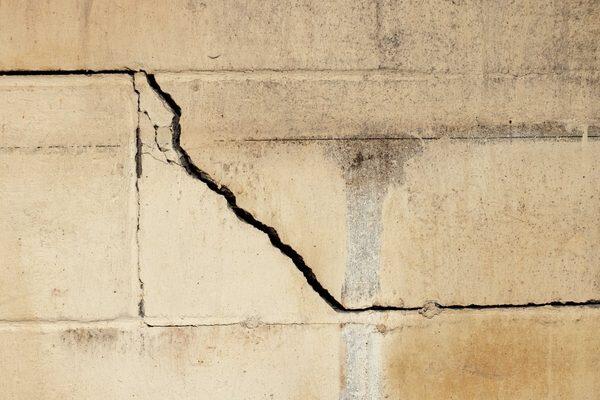
- Stair-step cracks zigzag along the mortar joints of concrete block walls. They often mean one part of the house is sinking faster than the rest, which is called differential settlement.
- Horizontal cracks run side to side, often near the middle of the wall. These are the most serious. They mean the soil outside is pushing hard enough to bow the wall inward. Foundation Supportworks, whose foundation repair systems NV Waterproofing installs, flags horizontal cracks as a sign the wall needs a professional evaluation right away.
Why is water leaking through the crack in my basement wall?
Water is concrete's biggest enemy. After heavy rain, the soil around your foundation fills with water and presses against your basement walls. This force is called hydrostatic pressure.
A crack that lets water in is no longer just cosmetic. Leaks lead to mold, musty smells, rotting wood, and damaged belongings. If water is coming through, it's time for basement crack repair.
Types of Foundation Cracks: A Quick Visual Guide
Use this chart to size up the crack you're looking at.
| Crack type | What it looks like | Danger level | Common cause |
|---|---|---|---|
| Hairline / vertical shrinkage | Thin vertical lines under 1/16 in. | Low (cosmetic) | Concrete curing and minor settling |
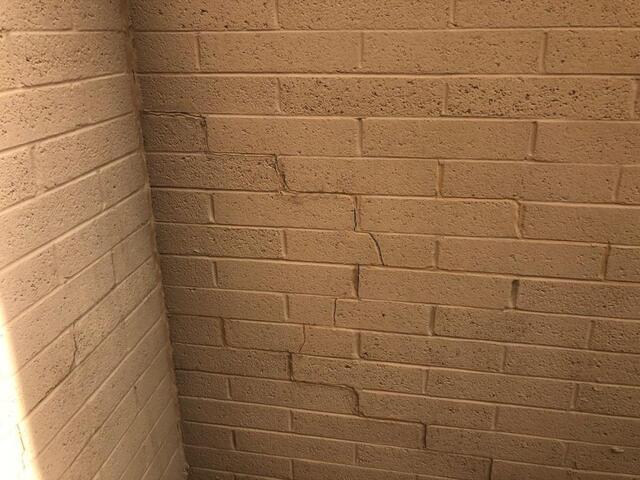
| Diagonal | Slanted lines, often near corners | Medium to high | Soil settling at different rates |
| Stair-step | Zigzag along mortar joints in block walls | High | Differential settlement under the footing |
| Horizontal | Straight line running side to side | Critical | Soil and water pressure pushing the wall in |
| Wider than 1/4 in. | Any crack with a gap over 1/4 in. | Critical | Active wall movement or severe pressure |
| Basement floor | Cracks in the concrete slab, sometimes uneven | Low to high | Shrinkage, settling soil, or soil heaving up |
Hairline and vertical shrinkage cracks
Tiny vertical cracks are common in poured concrete walls and often show up within the first year or two after a home is built. If they stay under 1/16 inch and stay dry, they're usually nothing to worry about.
Still, keep an eye on them. A vertical crack that starts letting in water, or one that's wider at one end than the other, is worth having checked.
Stair-step cracks
Stair-step cracks in a block foundation usually mean part of your home is settling. This often happens when the soil under the footing compresses, dries out, or washes away.
Diagonal cracks
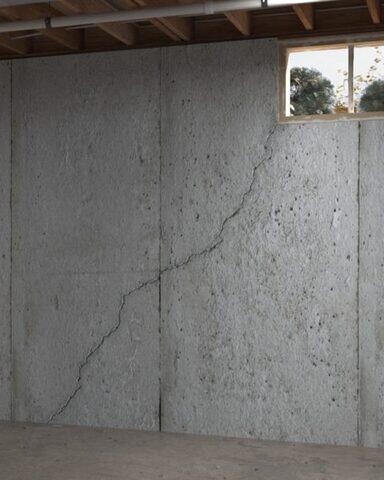
Diagonal cracks tend to form near corners as soil swells when wet and shrinks when dry. If you see diagonal cracks on both sides of a wall, or any wider than 1/4 inch, your foundation is under serious stress. Fixing the crack alone won't stop it. The cause has to be addressed too, often with foundation piers that support the home on stable soil.
Horizontal and wide cracks
Horizontal cracks are the most dangerous type of foundation wall crack. They show the wall is bowing or leaning inward under heavy soil and water pressure. Over time, that pressure can push a wall past the point of repair.
Any horizontal crack, no matter how thin, should be looked at by a professional. The good news is that bowing walls can usually be stabilized with wall anchors or wall braces if they're caught early.
Basement floor cracks
Cracks in your basement floor slab are common too. Thin, flat cracks from concrete shrinkage are usually harmless.
Watch for floor cracks where one side sits higher than the other, cracks wider than 1/4 inch, or water seeping up through the crack. Cracks that form a rough circle or loop can be a sign the soil underneath is heaving upward. Learn more about basement floor cracks and foundation floor problems.
Why Northern Virginia Homes Get Foundation Cracks
If you live in Fairfax, Prince William, Loudoun, or Arlington County, your foundation deals with a tough mix: clay soils, heavy rain, and winter freeze-thaw cycles. That's why so many local homeowners end up searching "is this foundation crack dangerous?"
Marine clay and expansive soils
Parts of Northern Virginia sit on clay that swells when wet and shrinks when dry. Fairfax County notes that marine clay is found across wide areas east of I-95 and can cause shrink-swell movement, poor drainage, and poor foundation support (Fairfax County Soil and Water Conservation District).
When this clay soaks up water, it expands and pushes against your basement walls. When it dries out in late summer, it shrinks and pulls away, leaving the foundation with less support. Season after season, that push and pull leads to cracks. You can learn more about how soil affects your foundation on our site.
Large trees planted close to the house make it worse. Their roots pull moisture out of the soil unevenly, which can cause one side of the house to settle more than the other.
Heavy rain, storms, and backfill soil
The DC area gets plenty of rain, plus summer thunderstorms and the occasional tropical storm. All that water soaks into the soil around your home and builds up hydrostatic pressure against the walls.
The soil right next to your foundation is also part of the problem. When a house is built, the area around the basement is dug out and refilled. This backfill soil is looser than undisturbed ground, so it holds water and expands more, putting extra pressure on the walls.
Winter freeze-thaw cycles
Northern Virginia winters swing above and below freezing again and again. Wet soil expands when it freezes and settles when it thaws. Each cycle puts a little more stress on your foundation and can widen existing cracks.
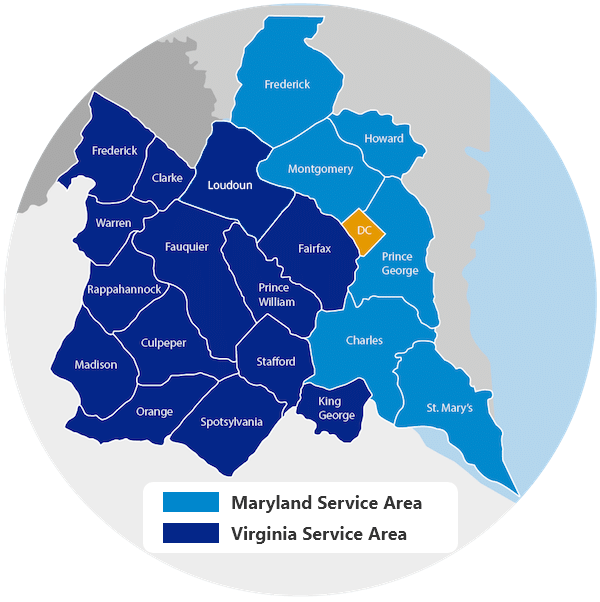
NV Waterproofing & Foundation Repair has served homeowners in Northern Virginia, Maryland, and Washington, D.C. since 1986. We know how local soils and weather affect homes here, and we can tell you whether your crack is cosmetic or needs repair.
Other Signs Your Foundation Crack Is a Bigger Problem
A crack rarely shows up alone. If you notice any of these signs along with a foundation crack, your home may have a deeper problem.
Doors and windows that stick
If doors suddenly rub, won't latch, or windows get hard to open, the frame may have shifted as the foundation moved. See more on sticking windows and doors.
Drywall cracks above doors and windows
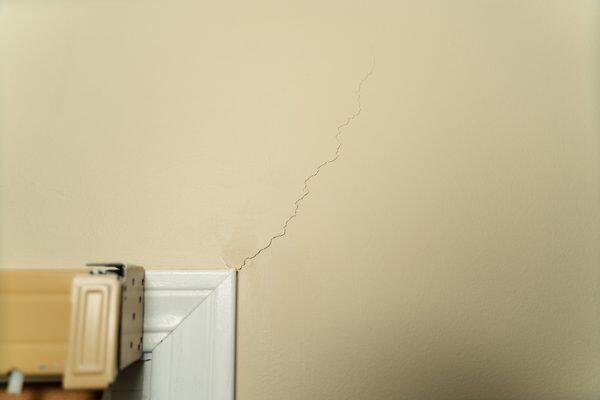
Diagonal cracks running from the corners of door frames and windows are a common sign of foundation settlement.
Musty smells or damp air
A musty, earthy smell in the basement usually means moisture is getting in. Even if you can't see water, cracks can let in enough dampness for mold to grow.
White chalky residue or water stains
White, powdery deposits (called efflorescence) or dark water stains on the wall show where water has come through and dried. They often trace a path right back to a crack.
Bugs or pests in the basement
Cracks give insects and small pests an easy way in. More bugs than usual, especially near a wall, can point to openings in the foundation.
Uneven or sloping floors
Floors that dip, slope, or feel bouncy upstairs can mean part of the foundation has settled.
Water pooling or soil washing away outside
Walk around the house after a heavy rain. Puddles against the foundation, soil eroding near the walls, or downspouts dumping water next to the house all put extra pressure on your basement walls.
A leaning chimney or gaps around windows
A chimney pulling away from the house, or new gaps between window frames and the wall, are signs of movement. Learn about tilting chimneys.
What Should I Do If I Find a Crack in My Foundation Wall?
Don't panic. Most cracks aren't emergencies, and you can do a basic check yourself with a few simple tools. Catching problems early is the best way to keep repair costs down.
6 steps to check a foundation crack yourself
- Measure the width. Slide a coin or a credit card into the crack, or use an inexpensive crack gauge. Under 1/16 inch is usually minor.
- Note the direction. Is it vertical, diagonal, stair-step, or horizontal? Horizontal cracks are the biggest concern.
- Mark it and watch for growth. Use a pencil to mark both ends and write the date. Check once a month to see if it's getting longer or wider.
- Look for water. Check for damp spots, staining, or white chalky residue (efflorescence) around the crack, especially after rain.
- Check for bowing or shifting. Run your hand across the crack. If one side sticks out farther than the other, or the wall looks bowed, the wall has moved.
- Watch for other signs upstairs. Sticking doors and windows, drywall cracks, and uneven floors can all point to foundation problems.
If the crack is wider than 1/4 inch, horizontal, leaking, or growing, call a professional.
Fix drainage to prevent new cracks
Many homes are structurally fine but have poor drainage, which lets water pile up against the foundation. A few fixes can take a lot of pressure off your walls:
- Make sure the ground slopes away from your house.
- Clean your gutters and extend downspouts at least several feet from the foundation.
- Don't let water pool near the basement after storms.
If water keeps finding its way in, an interior drainage system and sump pump can keep your basement dry for good. Learn more about our basement waterproofing solutions.
Frequently Asked Questions About Foundation Wall Cracks
What size foundation crack is normal?
Cracks under 1/16 inch wide are usually normal. They form as concrete cures and shrinks. Any crack wider than 1/4 inch, or one that's growing or leaking, shows active movement and should be checked by an expert.
Is a horizontal crack in a basement wall always serious?
Yes. Horizontal cracks mean soil and water pressure outside are pushing the wall inward. Even thin horizontal cracks should be inspected, because the wall can keep bowing if nothing is done.
Do all houses have foundation cracks?
Most homes with concrete foundations have at least a few small cracks, and that's normal. The ones to watch are cracks that are wide, horizontal, stair-stepped, leaking, or getting bigger.
Can foundation cracks fix themselves?
No. Cracks don't close up on their own. Northern Virginia's wet springs, dry summers, and freeze-thaw winters keep putting stress on concrete. A crack left alone can let water in, leading to mold and wood rot.
Does a cracked basement wall mean my foundation is failing?
Not necessarily. Many cracks are cosmetic, and many water problems come from poor drainage rather than a failing foundation. Sometimes cleaning gutters, extending downspouts, or regrading the yard is enough. A professional inspection will tell you which situation you're in.
How much does it cost to fix a foundation crack?
It depends on the type of crack and what's causing it. Sealing a small leaking crack costs far less than stabilizing a bowing wall. See our foundation repair costs page for what affects the price, or get an exact quote with a free inspection. We also offer financing.
Does homeowners insurance cover foundation cracks?
Usually not when cracks come from normal settling, soil movement, or wear over time. Coverage may apply if the damage was caused by a sudden covered event. Check your policy or call your insurance agent to be sure.
Worried About a Crack in Your Basement Wall? Get a Free Inspection
A crack you ignore today can turn into bowing walls, a flooded basement, and a much bigger repair bill. Getting it checked now protects your home's value and gives you peace of mind.
NV Waterproofing & Foundation Repair has helped homeowners across Northern Virginia, Maryland, and D.C. since 1986. We're BBB A+ rated and have earned the Angie's List Super Service Award. Our team will inspect your basement, find the real cause of the crack, and give you a clear plan to fix it, with no pressure.
Call 1-855-649-7594 or schedule your free inspection today. We serve Manassas, Fairfax, Gainesville, Ashburn, Sterling, Arlington, Alexandria, and the surrounding areas. See our full service area.