

Hydrostatic Pressure on Basement Walls: Causes, Signs & Solutions
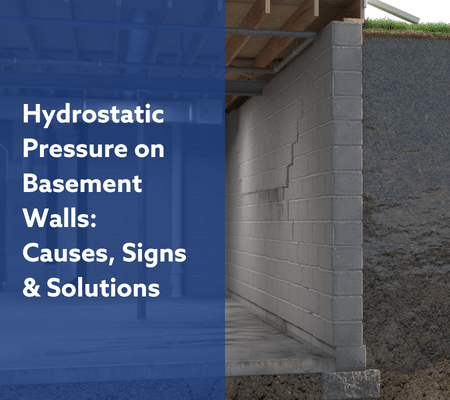
Hydrostatic pressure can put more than water in your basement. When water builds up in the soil around your foundation, it creates pressure against your basement walls. Over time, that pressure can contribute to cracks, leaks, bowing, and other foundation problems. For homeowners in Northern Virginia, Washington, D.C., and Suburban Maryland, heavy rainfall, drainage problems, local soil conditions, and the age and construction of a home can all affect how much water collects around the foundation.
The good news? You don't have to wait until your basement is flooding or your walls are visibly bowing to do something about it.
What is hydrostatic pressure?
Hydrostatic pressure is the force created when water builds up in the soil around a foundation. Your basement walls are below ground, so soil is naturally pressing against them. Under normal conditions, the foundation is designed to withstand that pressure. The problem starts when the surrounding soil becomes saturated and water has nowhere to drain.
As water collects around the foundation, the pressure against the basement walls increases. That water can eventually find its way through cracks, joints, porous masonry, or other weak points. In some cases, the problem is limited to water intrusion. In others, continued pressure can contribute to horizontal cracks, bowing walls, leaning walls, or other signs of structural movement.
That's why a wet basement and a damaged basement wall shouldn't always be treated as separate problems. The water entering your basement may be a symptom of what's happening outside your foundation.
What causes hydrostatic pressure?
Hydrostatic pressure usually develops when water cannot drain away from the foundation properly. Several things can contribute to the problem.
- Heavy rainfall A major storm can quickly saturate the soil surrounding your home. If the ground cannot absorb or drain the water fast enough, excess moisture can collect against the foundation. This can be especially noticeable when a basement leak only appears during or immediately after heavy rain.
- Poor drainage Drainage problems can direct more water toward your foundation than the surrounding soil can handle. Fixing these problems can reduce the amount of water reaching your foundation, although drainage improvements alone will not repair a basement wall that has already moved. Common examples include:
- Downspouts discharging too close to the house
- Gutters overflowing or becoming clogged
- Yard grading that slopes toward the foundation
- Failed or inadequate drainage systems
- Water collecting near basement walls
- Poorly draining soil around the foundation
- Local soil conditions Soil conditions vary significantly throughout Northern Virginia, D.C., and Suburban Maryland. Fairfax County, for example, has identified more than 100 soil types, including areas with expansive clay and other conditions that can affect drainage and foundation support. Some areas of Fairfax County contain marine clay that can shrink when dry and swell when wet. Fairfax County notes that these soils can contribute to poor drainage, foundation support problems, and movement of foundation walls. That doesn't mean every home in Northern Virginia has the same soil-related risk. Your home's location, soil, grading, drainage, foundation type, and construction history all play a role.
- Older construction and drainage systems Older homes may have outdated or deteriorating drainage systems, aging foundation materials, or waterproofing methods that don't adequately manage today's water conditions. A home can also develop drainage problems over time as landscaping changes, soil settles, gutters deteriorate, or previous drainage systems stop working properly.
Signs hydrostatic pressure may be affecting your basement
Hydrostatic pressure doesn't always announce itself with a major leak. Sometimes the first signs are easy to overlook.
Look for:
-
Water or damp spots on basement walls
-
Water appearing after heavy rain
-
Efflorescence, or white mineral deposits on masonry
-
Musty basement odors
-
Persistent humidity
-
Water along the wall-floor joint
-
Peeling paint or damaged wall coverings
-
Cracks in basement walls
-
Horizontal cracks in concrete block walls
-
Stair-step cracks in masonry
-
Walls that appear to bow or lean inward
Which signs are most concerning?
A little moisture after a major storm does not automatically mean your basement walls are structurally damaged.
Horizontal cracks, widening cracks, bowing, or inward movement deserve more attention.
A wall that is moving may be experiencing lateral pressure from the soil outside. The sooner that movement is evaluated, the more information you have about what's causing it and what repair options may be appropriate.
How can hydrostatic pressure damage basement walls?
Think of hydrostatic pressure as a water-management problem that can become a structural problem if the underlying conditions continue.
First, water collects in the soil around the foundation. As the soil becomes saturated, pressure against the basement wall increases. That pressure can push water through existing cracks or other openings. Continued moisture can damage basement finishes, increase humidity, and contribute to musty odors and mold-friendly conditions.
If the pressure is significant or continues for a long period of time, it can also contribute to foundation wall movement. Concrete block walls are particularly vulnerable to lateral pressure because the wall can crack along mortar joints and begin to bow inward. The exact cause of a damaged basement wall can vary, though. Soil pressure is only one possibility. Settlement, poor construction, drainage problems, expansive soils, and other foundation conditions can also contribute to cracking or movement.
That's why the goal should be to identify why the wall is moving, not simply cover up the crack.
How do you fix hydrostatic pressure in a basement?
There isn't one solution that works for every home. A proper repair starts with identifying where the water is coming from, how it is reaching the foundation, and whether the basement walls show signs of structural movement.
Depending on the condition of the home, solutions may include:
Interior drainage systems
An interior drainage system can collect water that reaches the basement perimeter and direct it to a sump pump for removal.
NV Waterproofing & Foundation Repair installs systems such as WaterGuard® to manage water along the basement perimeter and help keep it from reaching the finished basement floor.
Sump pumps
A sump pump removes collected water from the drainage system and pumps it away from the home.
A reliable sump pump is an important part of many basement waterproofing systems, particularly in homes that experience recurring water intrusion.
NV Waterproofing offers sump pump systems designed to remove water from the basement and help protect against future water problems.
Exterior waterproofing
In some situations, addressing the foundation from the outside may be appropriate. Exterior waterproofing can help prevent water from reaching the foundation in the first place.
The right approach depends on the home's construction, the source of the water, accessibility around the foundation, and the condition of the existing waterproofing.
Foundation wall repair
If hydrostatic pressure has contributed to a bowing, leaning, or cracked basement wall, waterproofing alone may not address the structural problem.
NV Waterproofing offers foundation repair solutions including wall anchors for bowing foundation walls and stair-step or diagonal cracking.
The important distinction is simple:
Waterproofing manages water. Foundation repair addresses structural movement.
Sometimes a basement needs one. Sometimes it needs both.
Can hydrostatic pressure be fixed from inside the basement?
In many cases, yes.
Interior waterproofing systems can be installed inside the basement to collect water and direct it to a sump pump. This can be an effective way to manage water without excavating around the exterior of the home. That doesn't mean every hydrostatic pressure problem should be handled from the inside.
If the basement wall is bowing, leaning, or showing significant cracking, the wall itself should be evaluated. A drainage system can manage water, but it does not automatically stabilize a wall that has already moved.
The best approach depends on what is happening around and beneath your home.
What can you do to reduce water around your foundation?
There are a few things homeowners can check before the next major storm.
1. Check your gutters
Make sure gutters are clear and moving water away from the roof and foundation.
2. Check your downspouts
Downspouts should discharge water far enough away from the foundation that it does not simply collect alongside the basement walls.
3. Look at your grading
Walk around the home after a storm. Is water draining away from the house, or does it collect near the foundation?
4. Check the basement after heavy rain
Pay attention to where water appears. Is it coming through a wall crack? Is it collecting along the floor? Is the wall-floor joint damp?
Where the water appears can provide useful clues about the source.
5. Keep an eye on foundation cracks
Take photos of cracks and compare them over time. A crack that is growing or changing may warrant a professional evaluation.
6. Don't simply cover the problem
Painting over a damp wall or sealing a crack from the inside may hide the symptom without addressing the water or pressure causing it.
If water continues to return, it's worth finding out why.
When should you have your basement inspected?
Consider scheduling a professional inspection if you notice:
- Recurring basement leaks after rain
- Water along the wall-floor joint
- Horizontal or stair-step cracks
- Cracks that appear to be widening
- A basement wall that is bowing or leaning
- Persistent dampness or musty odors
- Water collecting around the foundation
- A sump pump that cannot keep up during storms
You don't need to wait for a basement wall to become severely damaged before having it evaluated.
An inspection can help determine whether you're dealing primarily with water intrusion, a drainage problem, foundation movement, or a combination of issues.
Hydrostatic Pressure on Basement Walls FAQs
What is hydrostatic pressure?
Hydrostatic pressure is the force created by water in the soil surrounding a below-grade foundation. When water builds up around basement walls, it increases the pressure against the foundation and can contribute to water intrusion and, in some cases, structural movement.
Can hydrostatic pressure cause basement wall cracks?
Yes. Hydrostatic pressure can contribute to stress on basement walls and may play a role in cracking or bowing. However, cracks can have many causes, including settlement, soil movement, construction issues, and other foundation problems. A professional inspection can help determine the likely cause.
How do I know if hydrostatic pressure is causing my basement leak?
If water appears after heavy rain, collects along the basement perimeter, or enters through wall or floor cracks, hydrostatic pressure may be part of the problem. However, the exact source of a basement leak cannot always be determined from the inside alone.
Can hydrostatic pressure cause a basement wall to bow?
It can. When saturated soil puts sustained lateral pressure against a foundation wall, the wall may begin to bow or move inward. Horizontal cracks in a basement wall are another warning sign that should be evaluated.
How do you stop hydrostatic pressure in a basement?
The goal is to prevent water from accumulating around the foundation and safely manage any water that reaches the basement. Depending on the home, this may involve drainage improvements, interior or exterior waterproofing, sump pump systems, or foundation wall repair.
How much does it cost to fix hydrostatic pressure?
There is no single price because the solution depends on the source of the water, the size and layout of the basement, existing drainage, foundation condition, and whether structural repairs are needed.
A professional inspection is the best way to determine what your home actually needs before you invest in a repair.
Get help with basement water and foundation problems
Hydrostatic pressure doesn't necessarily mean your foundation is failing. But recurring water, widening cracks, bowing walls, and other changes shouldn't be ignored.
The right repair starts with understanding what's happening around your home.
NV Waterproofing & Foundation Repair has served homeowners throughout Northern Virginia, Washington, D.C., and Suburban Maryland since 1986. The company specializes in basement waterproofing, foundation repair, drainage systems, sump pumps, and related solutions for wet basements and foundation problems.
If you're concerned about hydrostatic pressure, basement water, or a cracked or bowing foundation wall, schedule a free, no-obligation estimate with NV Waterproofing & Foundation Repair.